Minimally Invasive Spine Surgery
Minimally invasive spine surgery offers carefully selected patients effective treatment with smaller incisions, reduced tissue disruption and a faster recovery compared to traditional approaches.
At Total Spine Health, surgical decisions are made cautiously and only where appropriate, following detailed assessment, imaging and discussion of all non-surgical options.
AT A GLANCE
- Specialist assessment for ongoing, severe or recurrent neck pain
- Diagnosis of mechanical, degenerative and nerve-related causes
- Clear advice on scans, investigations and treatment options
- Conservative treatment and surgery considered where appropriate
Understanding MINIMALLY INVASIVE SPINE SURGERY
Specialist minimally invasive spine surgery
Carefully selected surgical treatment with a focus on precision and recovery
Minimally invasive spine surgery uses specialised techniques and instruments to treat spinal conditions through smaller incisions. This approach aims to reduce disruption to muscles and surrounding tissues while still addressing the underlying cause of symptoms.
Not all patients are suitable for minimally invasive surgery. At Total Spine Health, treatment is tailored to the individual, with surgery only recommended where it is clearly appropriate and likely to provide meaningful benefit.
WHAT IS MINIMALLY INVASIVE SURGEY
Understanding modern surgical techniques for spinal conditions
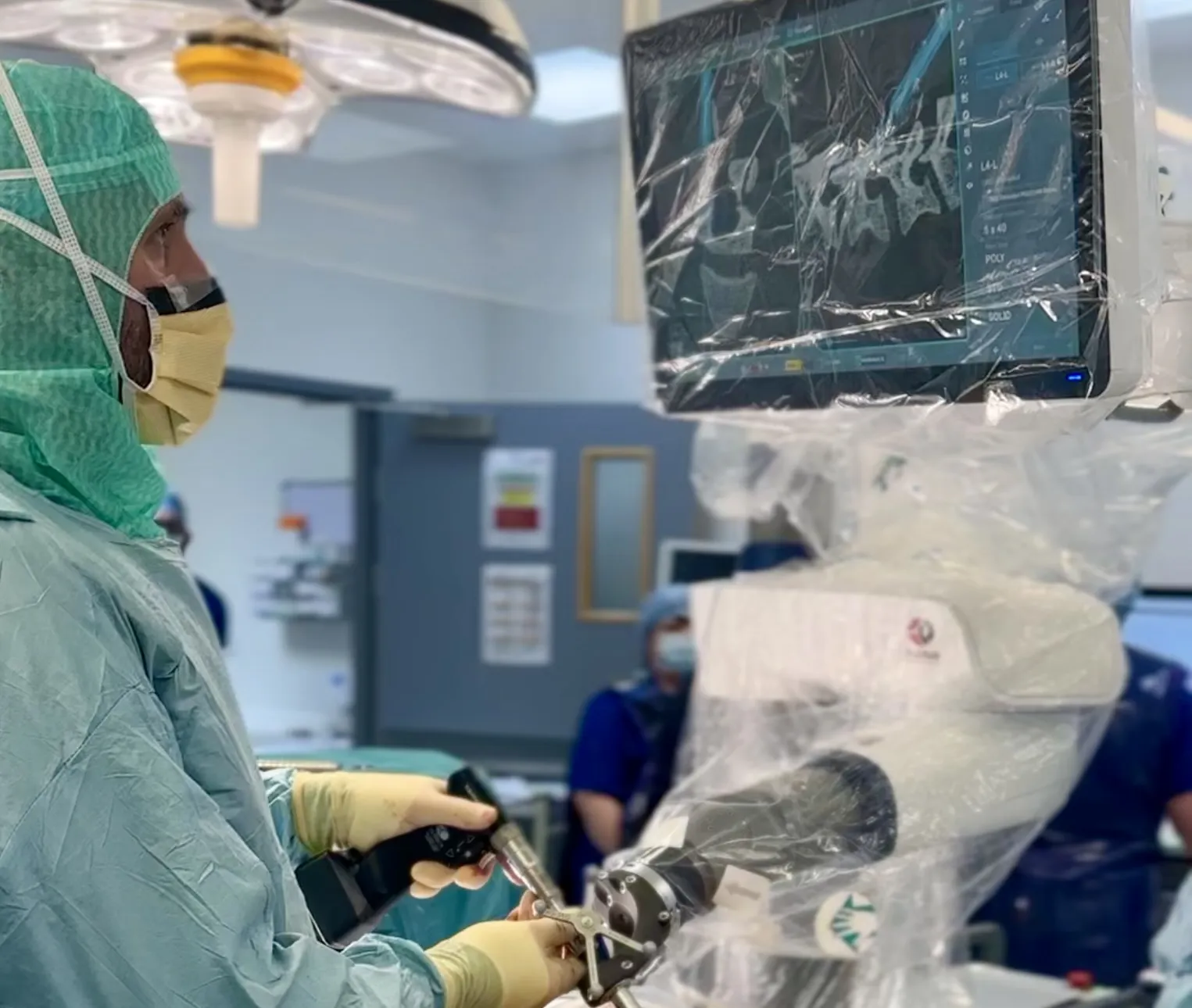
Minimally invasive spine surgery refers to techniques that allow spinal conditions to be treated through smaller incisions, using specialised instruments and imaging guidance. The aim is to reach the affected area with less disruption to surrounding muscles and tissues compared to traditional open surgery.
These approaches are used in selected cases where they can achieve the same surgical objective while reducing unnecessary tissue damage. This may lead to less post-operative pain, shorter hospital stays and a more straightforward recovery for some patients.
Minimally invasive techniques are not suitable for every condition. The choice of approach depends on the underlying diagnosis, the complexity of the problem and whether a less invasive method can safely and effectively address the cause of symptoms.
COMMON SYMPTOMS
Potential advantages when surgery is appropriate
When suitable, minimally invasive techniques may offer several advantages compared to traditional open surgery. These benefits depend on the condition being treated and the specific procedure performed.
- smaller incisions and reduced muscle disruption
- less post-operative pain in some cases
- shorter hospital stay or day-case surgery where appropriate
- reduced blood loss during surgery
- quicker return to normal activity for some patients
- lower risk of certain complications such as wound issues
While these benefits are important, the priority is always achieving a safe and effective surgical outcome. The chosen technique is based on what will provide the best result rather than the size of the incision alone.
CONDITIONS TREATED
Spinal conditions where minimally invasive techniques may be considered
Minimally invasive spine surgery may be appropriate for selected patients depending on the underlying diagnosis, symptom pattern and imaging findings. Common conditions where these techniques may be used include:
WHEN MINIMALLY INVASIVE SURGERY MAY BE APPROPRIATE
When a less invasive approach may be considered
Minimally invasive spine surgery is not suitable for every patient or every spinal condition. It is considered where a smaller-access approach can safely and effectively achieve the same surgical aim as a more traditional operation.
This depends on several factors, including the diagnosis, the pattern of symptoms, scan findings, previous treatment and the overall goals of surgery. In some cases, a minimally invasive approach may offer clear advantages. In others, a more traditional technique may provide the safest and most effective result.
Minimally invasive surgery may be considered when:
- symptoms are caused by a clearly defined structural problem
- non-surgical treatment has not provided enough improvement
- pain, numbness or weakness is linked to nerve compression
- imaging findings match the clinical symptoms
- a smaller-access procedure can safely achieve the required result
- reduced tissue disruption may help support recovery
The aim is never simply to offer the smallest operation. The priority is always choosing the approach most likely to deliver a safe, effective and durable outcome.
ASSESSMENT AND SURGICAL PLANNING
Careful assessment before any surgical decision
Planning for minimally invasive spine surgery begins with a detailed clinical assessment. This includes understanding the history of symptoms, reviewing previous treatment, examining how symptoms affect daily life and correlating this with imaging findings.
A decision about surgery is only made once the diagnosis is clear and the likely benefits, limitations and alternatives have been discussed properly.
Assessment may include:
- a detailed review of symptoms and functional limitations
- examination of movement, strength, sensation and reflexes
- review of MRI, CT or X-ray imaging
- consideration of previous treatment and response
- discussion of non-surgical options still available
- careful selection of the most appropriate surgical technique where needed
This approach helps ensure that surgery is recommended for the right reasons, using the right technique, at the right time.
PROCEDURES AND TECHNIQUES
Minimally invasive techniques used in selected cases
A range of minimally invasive techniques may be used depending on the spinal condition being treated and the surgical objective.
In selected cases, endoscopic techniques can be used to treat disc-related nerve compression through very small incisions. This may allow day-case treatment and faster early recovery for some patients.
Tubular techniques can be used to access and remove disc material pressing on a nerve while reducing disruption to surrounding tissues.
For some patients with spinal stenosis or nerve compression, decompression may be performed through smaller incisions using specialised instruments and imaging guidance.
In selected cases, robotic-assisted and image-guided techniques may support accuracy and planning, particularly in more complex stabilisation procedures.
Some fusion procedures, including anterior and lateral approaches, may offer important advantages in carefully selected patients depending on the condition being treated.
RECOVERY AFTER MINIMALLY INVASIVE SPINE SURGERY
What recovery may involve
Recovery varies depending on the procedure performed, the condition being treated and the patient’s overall health and fitness. While minimally invasive techniques may reduce tissue disruption, recovery still requires sensible pacing, appropriate rehabilitation and realistic expectations.
For some patients, this approach may mean a shorter hospital stay or even day-case surgery. For others, the recovery process may still take time, particularly where symptoms have been present for a long period before treatment.
Recovery planning may include:
- early mobilisation where appropriate
- pain management after surgery
- gradual return to walking and daily activity
- follow-up review and wound assessment
- physiotherapy or rehabilitation where needed
- advice on return to work, exercise and lifting
The aim is not simply a smaller incision, but a safe recovery and a meaningful improvement in symptoms and function.
FAQs
Frequently asked questions about minimally invasive spine surgery
Is minimally invasive spine surgery suitable for everyone?
No. It is appropriate only in selected cases where a less invasive approach can safely and effectively treat the underlying problem.
Does minimally invasive surgery mean day-case surgery?
Not always. Some procedures may be suitable for day-case treatment, but others still require an overnight stay depending on the operation and the patient.
Is recovery always quicker?
Recovery may be quicker in some cases because there is less disruption to surrounding tissues, but this depends on the condition being treated and the type of surgery performed.
Can minimally invasive surgery treat sciatica or a slipped disc?
Yes, in selected cases. Disc-related nerve compression causing sciatica or arm pain may sometimes be treated using minimally invasive techniques such as endoscopic or tubular procedures.
Is minimally invasive surgery better than traditional surgery?
Not necessarily. The best approach is the one that most safely and effectively treats the problem. In some cases this may be minimally invasive, while in others a more traditional operation may be more appropriate