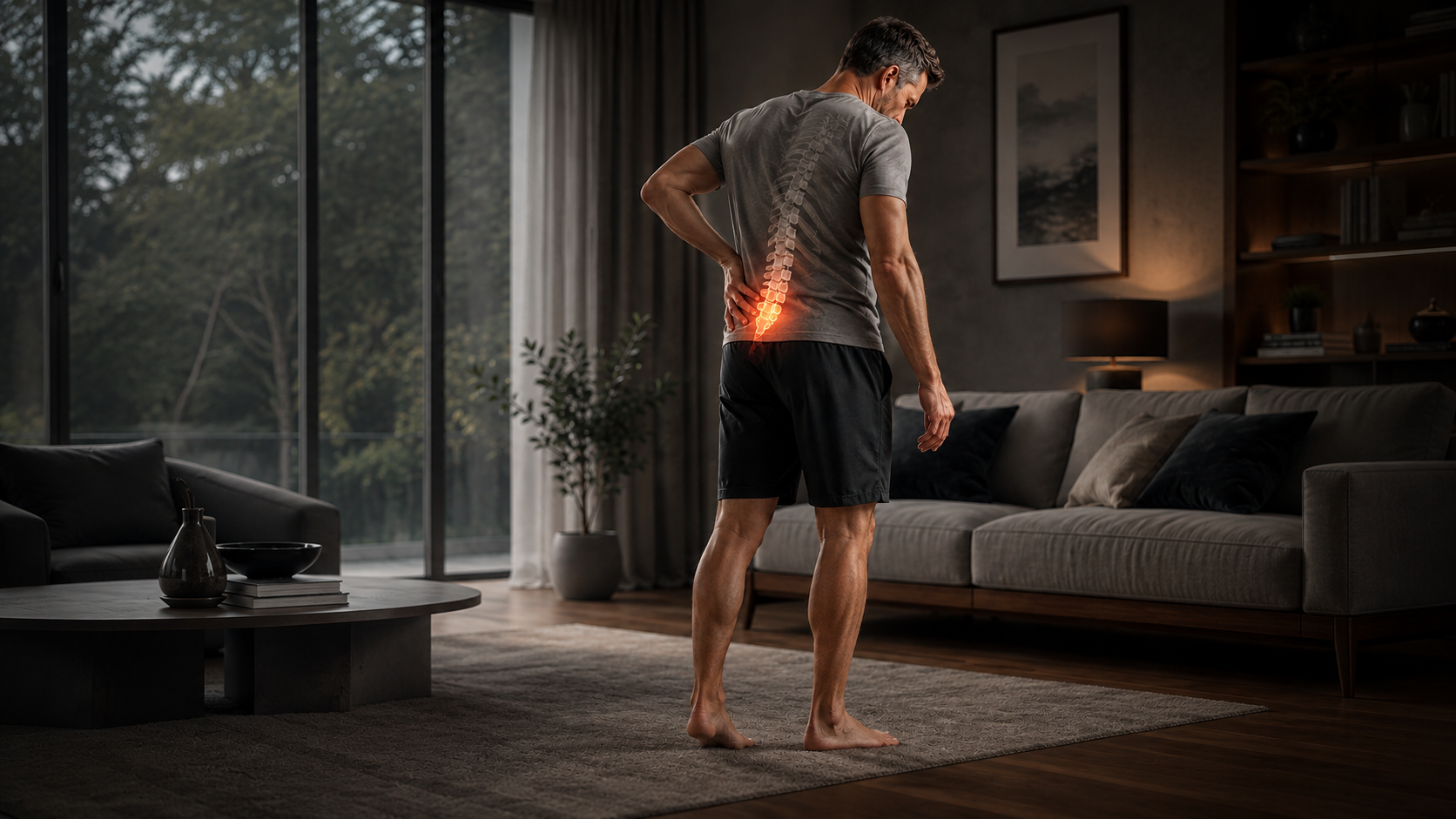
Spondylolisthesis is a condition where one vertebra (the bones that make up the spine) moves forward or backwards in relation to the vertebra below it.
For some people, spondylolisthesis causes no symptoms and may only be discovered incidentally on an X-ray or MRI scan. For others, movement of the vertebra can lead to lower back pain, spinal instability, nerve compression and symptoms such as leg pain or numbness.
The good news is that many patients can manage their symptoms successfully with non-surgical treatment. However, when instability or nerve compression becomes significant, surgery may be considered to restore stability and relieve pressure on affected nerves.
Understanding spondylolisthesis treatment options can help you make informed decisions about your spinal health.
What Is Spondylolisthesis?
The spine is made up of a series of vertebrae stacked on top of one another. These bones are connected by joints and supported by ligaments, muscles and spinal discs that allow movement while maintaining stability.
Spondylolisthesis occurs when one vertebra slips out of its normal position compared with the vertebra below it.
This most commonly happens in the:
- Lower back (lumbar spine), particularly the L4-L5 or L5-S1 levels
The degree of movement can vary. Some people have a small amount of vertebral movement that causes no symptoms, while others develop significant instability.
Types of Spondylolisthesis
There are several different types of spondylolisthesis depending on the underlying cause.
Degenerative Spondylolisthesis
This is the most common type in adults.
It occurs due to age-related changes in the spine, including:
- Disc degeneration
- Arthritis of the spinal joints
- Loss of normal spinal stability
As the supporting structures of the spine weaken, one vertebra may gradually move forward.
This type is more common in adults over the age of 50.
Isthmic Spondylolisthesis
This occurs when there is a defect or stress fracture in a small part of the vertebra called the pars interarticularis.
This area connects different parts of the vertebra and can weaken over time, allowing one vertebra to slip forward.
It is often associated with activities involving repeated spinal extension, such as:
- Gymnastics
- Certain sports
- Heavy physical activity
Traumatic Spondylolisthesis
This occurs following an injury that damages the structures supporting the spine.
Examples include:
- Falls
- Sports injuries
- Accidents
Congenital Spondylolisthesis
Some people are born with differences in the shape or development of the spine that increase the risk of vertebral slippage.
What Causes Spondylolisthesis?
Several factors can contribute to the development of spondylolisthesis.
Common causes include:
- Age-related spinal degeneration
- Disc wear and tear
- Arthritis affecting spinal joints
- Stress fractures in the vertebra
- Previous spinal injury
- Genetic factors affecting spinal structure
Certain activities may increase stress on the lower back, including:
- Repetitive bending and lifting
- Heavy manual work
- High-impact sports
However, many people develop spondylolisthesis gradually as part of changes occurring within the spine over time.
Common Symptoms of Spondylolisthesis
Symptoms vary significantly depending on the severity of the condition and whether nerves are affected.
Some people have no symptoms at all.
When symptoms occur, they may include:
- Lower back pain
- Stiffness in the lower back
- Pain that worsens with standing or activity
- Reduced flexibility
- Tightness in the hamstring muscles
- Pain travelling into the buttocks or legs
- Tingling or numbness
- Leg weakness
Symptoms often develop gradually and may come and go depending on activity levels.
How Spondylolisthesis Can Cause Nerve Symptoms
When a vertebra moves out of position, it can reduce the space available for nearby nerves.
This may lead to:
- Nerve irritation
- Nerve compression
- Sciatica-type symptoms
Patients may experience:
- Shooting pain down the leg
- Pins and needles
- Numbness
- Weakness
The pattern of symptoms depends on which nerves are affected.
How Is Spondylolisthesis Diagnosed?
Diagnosis begins with a detailed assessment of your symptoms, medical history and physical examination.
Your spine specialist will consider:
- Where your pain is located
- Whether symptoms travel into the legs
- How symptoms affect your activities
- Any previous injuries or treatments
A physical examination may assess:
- Strength
- Reflexes
- Sensation
- Walking pattern
- Spinal movement
Imaging Tests for Spondylolisthesis
X-rays
X-rays are often used to identify whether one vertebra has shifted in relation to another.
Specialised movement X-rays may sometimes be used to assess whether the spine is stable during bending and movement.
MRI Scan
MRI provides detailed images of:
- Nerves
- Spinal discs
- Soft tissues
- Areas of nerve compression
It can help identify whether the slipped vertebra is affecting nearby nerves.
CT Scan
A CT scan can provide detailed information about the bones of the spine and may be useful when assessing fractures or complex anatomy.
Non-Surgical Spondylolisthesis Treatment
Many patients with spondylolisthesis can manage symptoms without surgery.
Treatment depends on:
- Severity of symptoms
- Degree of vertebral movement
- Presence of nerve compression
- Lifestyle goals
Physiotherapy and Exercise
Physiotherapy is often a key part of treatment.
A tailored programme may focus on:
- Strengthening core muscles
- Improving spinal stability
- Increasing flexibility
- Improving posture
- Reducing strain on the lower back
The goal is to improve support around the spine and help patients return to normal activities.
Lifestyle Modifications
Certain adjustments can reduce stress on the spine.
These may include:
- Maintaining a healthy weight
- Improving lifting techniques
- Avoiding prolonged inactivity
- Building regular exercise into daily life
- Modifying activities that worsen symptoms
Staying active is generally encouraged, as maintaining strength and mobility supports long-term spinal health.
Medication and Pain Management
Medication may help manage symptoms, particularly during painful flare-ups.
Options may include:
- Anti-inflammatory medication
- Pain relief
- Medication for nerve-related symptoms
Treatment should always be discussed with a healthcare professional.
Spinal Injections
For selected patients with persistent nerve-related symptoms, image-guided injections may provide temporary relief.
These may help by:
- Reducing inflammation around irritated nerves
- Improving mobility
- Allowing physiotherapy to progress
Injections are usually considered as part of a wider treatment programme.
When Is Surgery Considered?
Surgery is not required for everyone with spondylolisthesis.
It may be considered when:
- Pain continues despite appropriate non-surgical treatment
- Symptoms significantly affect quality of life
- There is progressive nerve weakness
- There is significant nerve compression
- The spine is unstable
The aim of surgery is usually to:
- Relieve pressure on nerves
- Restore stability
- Prevent further movement of the affected segment
Surgical Treatment Options for Spondylolisthesis
The recommended procedure depends on the cause and severity of the condition.
Spinal Decompression
If nerves are compressed, surgery may involve removing tissue that is pressing on the nerves.
This is known as decompression surgery.
The aim is to relieve symptoms such as:
- Leg pain
- Numbness
- Weakness
Spinal Fusion Surgery
Fusion is commonly used when instability is present.
During fusion surgery:
- The affected vertebrae are stabilised
- Bone graft material is used to encourage healing
- Screws and rods may be used to maintain alignment while fusion occurs
The aim is to create a stable section of spine and reduce painful movement.
Minimally Invasive Spine Surgery
Advances in spinal surgery mean that some patients may be suitable for minimally invasive techniques.
Potential benefits include:
- Smaller incisions
- Reduced muscle disruption
- Less postoperative pain
- Shorter hospital stays
- Faster rehabilitation
Suitability depends on individual anatomy and the specific spinal problem.
Recovery After Spondylolisthesis Treatment
Recovery depends on whether treatment is conservative or surgical.
Non-Surgical Recovery
Many patients improve gradually through:
- Physiotherapy
- Exercise
- Activity modification
- Lifestyle changes
Recovery After Surgery
Following fusion or decompression surgery, recovery is gradual.
Patients may typically work towards:
- Increasing walking distance
- Improving strength
- Returning to everyday activities
- Gradually resuming work and exercise
Physiotherapy may form an important part of rehabilitation.
Your recovery timeline will depend on factors including:
- The type of surgery performed
- Your general health
- The extent of spinal changes
When Should You See a Spine Specialist?
You should consider specialist assessment if:
- Back pain is persistent or worsening
- Pain travels into your legs
- You experience numbness or weakness
- Symptoms affect work or daily activities
- Conservative treatments have not helped
- You have been told you may need spinal fusion surgery and would like further advice
A specialist assessment can help confirm your diagnosis and ensure treatment is tailored to your specific condition.
Frequently Asked Questions
Is spondylolisthesis serious?
Spondylolisthesis varies greatly between individuals. Some people have mild changes with no symptoms, while others experience significant pain or nerve problems requiring treatment.
Can spondylolisthesis heal without surgery?
The vertebra usually does not move back into its original position naturally, but symptoms can often be managed successfully through physiotherapy, exercise and lifestyle changes.
Does spondylolisthesis always require spinal fusion?
No. Fusion is only considered when symptoms, instability or nerve compression justify surgery.
Can exercise make spondylolisthesis worse?
Appropriate exercise is usually beneficial. A physiotherapist can recommend exercises designed to improve spinal support safely.
What is the difference between spondylolisthesis and a slipped disc?
They are different conditions. A slipped disc involves damage to a spinal disc, while spondylolisthesis involves movement of one vertebra relative to another.
When to Seek Expert Advice
Living with persistent back pain, leg symptoms or spinal instability can affect every area of life. However, having spondylolisthesis does not automatically mean you need surgery.
Many patients achieve good symptom control through non-surgical treatment. For those with significant instability or nerve compression, modern spinal procedures can provide effective relief and improved function.
An accurate diagnosis is the first step. A consultation with a specialist spine team can help you understand your condition and identify the treatment approach most appropriate for your individual needs.