If you've been diagnosed with spinal stenosis, or suspect it may be causing your symptoms, you may be wondering what treatment options are available and whether surgery is inevitable.
The good news is that many people with spinal stenosis can successfully manage their symptoms without surgery. With the right diagnosis and an individualised treatment plan, pain can often be reduced, mobility improved, and quality of life restored.
For some patients, however, symptoms become severe enough that surgical treatment offers the best chance of long-term relief. Understanding the condition and the available treatment options is the first step towards making informed decisions about your care.
What Is Spinal Stenosis?
Spinal stenosis is a condition where the spaces within the spine become narrower, placing pressure on the spinal cord or the nerves that travel through the spinal canal.
The condition most commonly develops gradually as part of the natural ageing process. As the spine changes over time, ligaments can thicken, joints become enlarged through arthritis, and discs lose height. Together, these changes reduce the available space for the nerves.
Spinal stenosis most frequently affects:
- The lumbar spine (lower back) – causing lower back pain and leg symptoms
- The cervical spine (neck) – potentially causing pain, numbness or weakness in the arms and hands
Many people have narrowing visible on MRI scans without experiencing symptoms. Treatment is only recommended when the narrowing is responsible for clinical symptoms.
What Causes Spinal Stenosis?
The most common cause is age-related degeneration of the spine, but several factors can contribute to the condition.
These include:
- Osteoarthritis affecting the spinal joints
- Thickening of spinal ligaments
- Bulging or herniated discs
- Bone spurs (osteophytes)
- Degenerative disc disease
- Previous spinal injuries
- Previous spinal surgery
- Less commonly, congenital narrowing present from birth
Most patients develop symptoms gradually over many years rather than after a single injury.
Common Symptoms of Spinal Stenosis
Symptoms vary depending on which part of the spine is affected and how much pressure is placed on the nerves.
Lumbar Spinal Stenosis
The lower back is the most common site.
Symptoms may include:
- Lower back pain
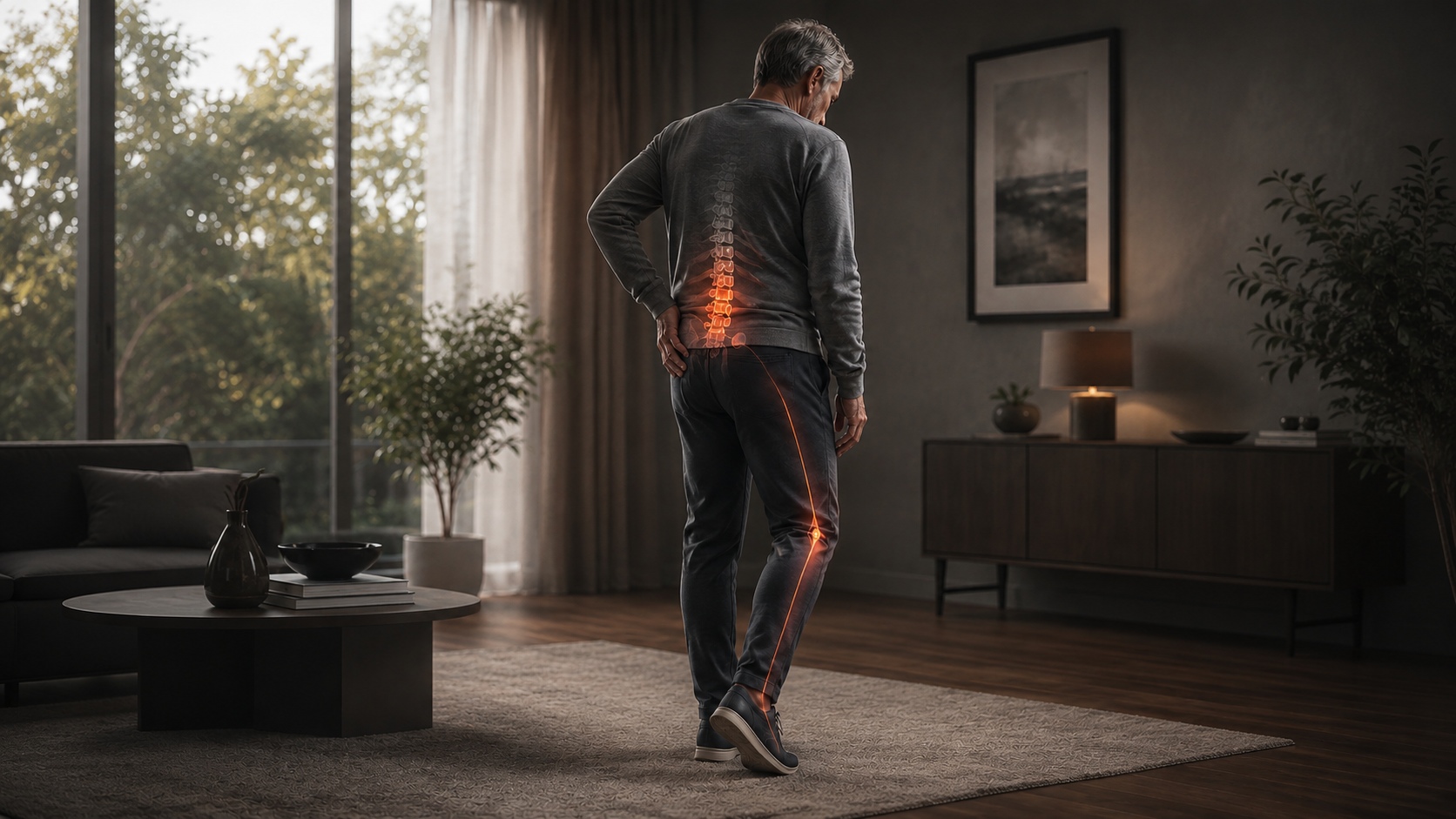
- Pain travelling into one or both legs
- Numbness or tingling
- Leg weakness
- Cramping while walking
- Difficulty standing upright
- Symptoms that improve when sitting or leaning forward
A classic feature is neurogenic claudication—pain or heaviness in the legs after walking that eases with rest or bending forwards.
Many patients notice they can walk further while pushing a shopping trolley than walking normally because leaning forwards opens the spinal canal slightly.
Cervical Spinal Stenosis
When narrowing occurs in the neck, symptoms may include:
- Neck pain
- Shoulder or arm pain
- Numbness in the hands
- Reduced hand dexterity
- Difficulty with balance
- Weakness in the arms or hands
In more advanced cases, pressure on the spinal cord itself (cervical myelopathy) requires prompt specialist assessment.
How Is Spinal Stenosis Diagnosed?
Diagnosis begins with a detailed consultation.
Your spine specialist will discuss:
- Your symptoms
- How they affect daily activities
- Walking distance
- Previous treatments
- Medical history
A physical examination will assess:
- Muscle strength
- Reflexes
- Sensation
- Walking pattern
- Balance
- Range of movement
Imaging Investigations
If spinal stenosis is suspected, imaging helps confirm the diagnosis.
An MRI scan is the preferred investigation because it provides detailed images of:
- Spinal nerves
- Discs
- Ligaments
- Degree of narrowing
In some situations, additional investigations such as CT scans or X-rays may also be useful.
Importantly, MRI findings should always be interpreted alongside your symptoms and examination findings. Many people have narrowing on scans that does not require treatment.
Non-Surgical Spinal Stenosis Treatment
For many patients, conservative treatment provides excellent symptom relief.
Treatment is tailored to each individual's symptoms, overall health and lifestyle.
Physiotherapy
Physiotherapy is often one of the first treatments recommended.
A structured exercise programme can help:
- Improve spinal flexibility
- Strengthen the muscles supporting the spine
- Improve posture
- Increase walking tolerance
- Reduce stiffness
- Improve balance
Physiotherapists can also advise on activity modification and strategies for managing symptoms during everyday activities.
Pain Management
Medication may help control symptoms while maintaining activity levels.
Depending on your symptoms, treatment may include:
- Anti-inflammatory medication
- Simple pain relief
- Medication for nerve pain
- Short courses of stronger medication when appropriate
Medication should be part of a broader treatment plan rather than the sole long-term solution.
Lifestyle Changes
Simple lifestyle adjustments can make a meaningful difference.
These include:
- Maintaining a healthy weight
- Regular low-impact exercise such as walking or swimming
- Improving posture
- Avoiding prolonged standing where possible
- Taking regular movement breaks
Remaining active is generally preferable to prolonged rest, which can lead to muscle weakness and reduced mobility.
Image-Guided Spinal Injections
For patients whose symptoms persist despite physiotherapy and medication, spinal injections may be recommended.
Epidural steroid injections can reduce inflammation around irritated nerves, providing temporary pain relief that enables patients to participate more effectively in rehabilitation.
While injections do not reverse the narrowing itself, they can play an important role in managing symptoms for selected patients.
When Is Surgery Recommended?
Not everyone with spinal stenosis requires surgery.
However, surgical treatment may be appropriate if:
- Symptoms have persisted despite conservative treatment
- Walking distance continues to reduce
- Pain significantly affects quality of life
- There is progressive weakness
- MRI confirms significant nerve compression
The aim of surgery is to relieve pressure on the affected nerves while preserving spinal stability wherever possible.
Surgical Treatment Options
The most appropriate procedure depends on the cause and severity of the stenosis.
Common procedures include:
Lumbar Decompression Surgery
Also known as a laminectomy, this procedure removes bone and thickened ligament to create more space for the nerves.
Minimally Invasive Decompression
Many patients may be suitable for minimally invasive techniques using smaller incisions and specialised instruments.
Potential benefits include:
- Less muscle damage
- Reduced blood loss
- Less postoperative pain
- Shorter hospital stay
- Faster recovery
Spinal Fusion
If spinal instability is also present, decompression may be combined with spinal fusion to stabilise the affected segment.
Your surgeon will discuss the most appropriate option based on your individual condition.
Recovery After Spinal Stenosis Treatment
Recovery varies depending on the treatment received and the patient's overall health.
Following surgery, many patients notice an improvement in leg pain relatively quickly, although numbness and weakness may take longer to recover.
Rehabilitation usually includes:
- Walking programmes
- Physiotherapy
- Core strengthening
- Gradual return to daily activities
- Advice on lifting and posture
Recovery is a gradual process, and following your rehabilitation plan plays an important role in achieving the best possible outcome.
When Should You See a Spine Specialist?
Many people experience occasional back pain as they get older, but certain symptoms should prompt specialist assessment.
You should consider seeing a spine specialist if:
- Leg pain limits your walking distance
- Symptoms have lasted more than six weeks
- Physiotherapy has not improved your condition
- You experience numbness or weakness
- Pain is affecting work or daily life
- You have concerns about your diagnosis or treatment options
Early assessment allows treatment to begin before symptoms become more severe and helps identify whether non-surgical or surgical management is most appropriate.
Frequently Asked Questions
Can spinal stenosis improve without surgery?
Yes. Many patients manage their symptoms successfully with physiotherapy, exercise, lifestyle changes and pain management.
Does spinal stenosis always get worse?
Not necessarily. Some people remain stable for many years, while others experience gradual progression. Regular assessment can help monitor changes and guide treatment.
Is walking good for spinal stenosis?
For many people, walking is beneficial. However, symptoms may limit walking distance. A physiotherapist can recommend an exercise programme tailored to your needs.
Can spinal stenosis cause permanent nerve damage?
If significant nerve compression is left untreated for a prolonged period, permanent nerve damage may occur in some cases. This is why persistent or worsening symptoms should be assessed promptly.
What is the success rate of surgery for spinal stenosis?
For appropriately selected patients, decompression surgery is generally very successful at relieving leg pain caused by nerve compression. Your surgeon will discuss the expected benefits, risks and likely outcomes based on your individual circumstances.
When to Seek Expert Advice
Living with spinal stenosis doesn't necessarily mean living with constant pain or accepting reduced mobility. Many patients achieve significant improvement through conservative treatment, while others benefit from modern surgical techniques when symptoms become more severe.
An accurate diagnosis is the foundation of successful treatment. If your symptoms are affecting your daily life, a consultation with a spinal specialist can help identify the underlying cause and guide you towards the most appropriate treatment plan.