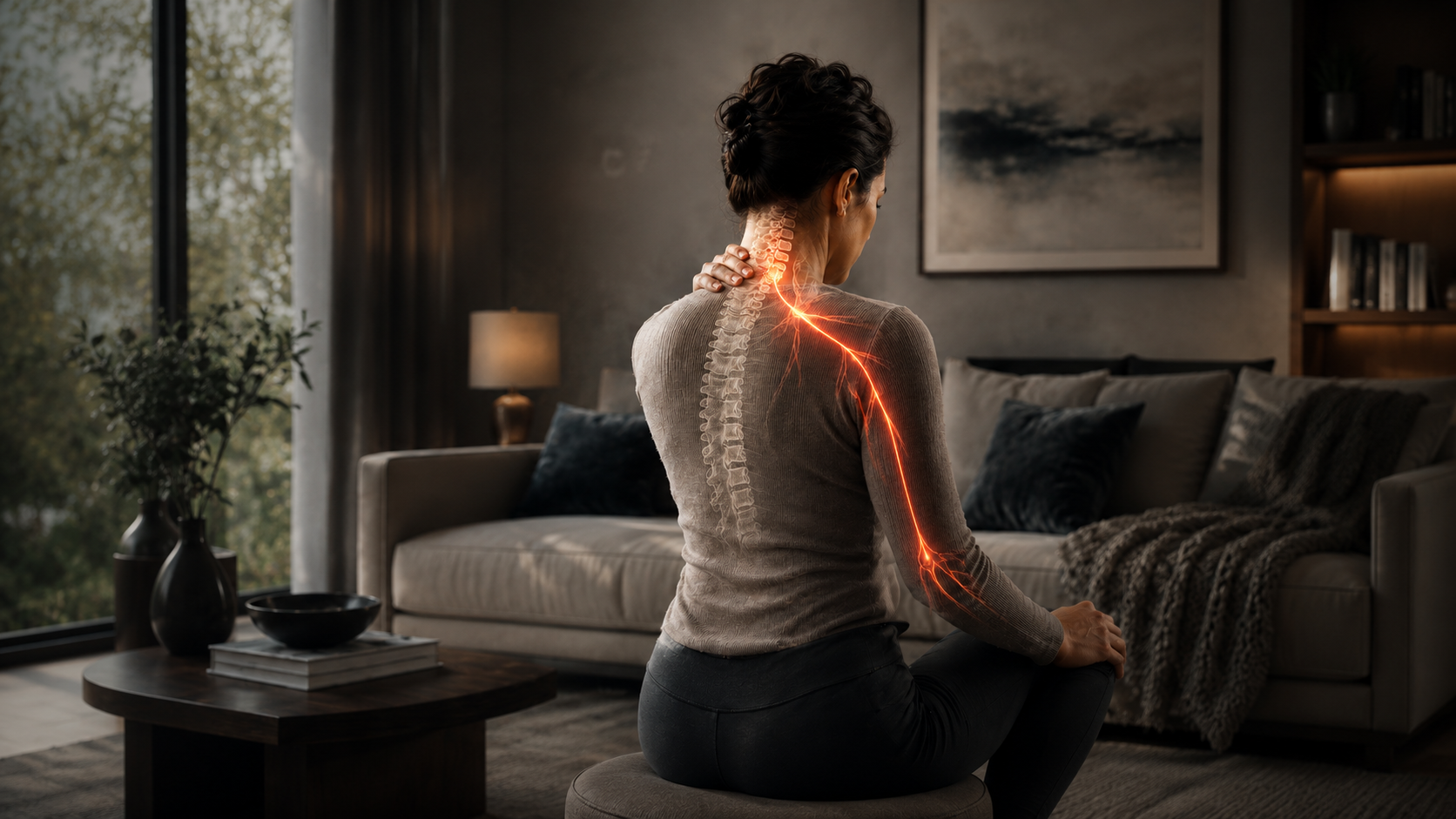
Neck pain is extremely common, but when pain begins to travel into the shoulder, arm or hand, it may be a sign that a nerve in the neck is being irritated or compressed.
This condition is known as cervical radiculopathy, sometimes described by patients as a “pinched nerve in the neck.”
While the symptoms can be uncomfortable and sometimes alarming, many people improve with non-surgical treatment. However, persistent pain, numbness or weakness may require assessment by a spine specialist to determine the best course of action.
Understanding the causes, symptoms and cervical radiculopathy treatment options can help you take the right steps towards recovery.
What Is Cervical Radiculopathy?
The cervical spine is the upper part of the spine that supports the neck and connects to the head.
It is made up of seven vertebrae, separated by discs that provide cushioning and allow movement. Between each vertebra, nerves branch away from the spinal cord and travel into the shoulders, arms and hands.
Cervical radiculopathy occurs when one of these nerves becomes compressed or irritated, leading to symptoms along the pathway of that nerve.
The problem is not usually caused by the nerve itself, but by changes in the structures around it, such as:
- A herniated disc
- Narrowing of the spinal canal
- Bone spurs
- Arthritis-related changes
What Causes Cervical Radiculopathy?
Several conditions can place pressure on the nerves in the neck.
Cervical Disc Herniation
One of the most common causes is a herniated cervical disc.
As discs age or become damaged, the softer inner material can push through cracks in the outer layer. If this material presses on a nearby nerve, it can cause pain, tingling or weakness in the arm.
Age-Related Changes
As we get older, natural wear and tear can affect the cervical spine.
These changes may include:
- Loss of disc height
- Thickening of spinal ligaments
- Enlargement of spinal joints
- Formation of bone spurs
Together, these changes can reduce the space available for nerves.
Cervical Spinal Stenosis
Cervical spinal stenosis occurs when the spinal canal becomes narrower, potentially placing pressure on the spinal cord or nerve roots.
This condition is more common with ageing and may sometimes contribute to more complex neurological symptoms.
Injury or Trauma
A sudden injury, such as a whiplash-type event, may aggravate existing spinal changes or contribute to nerve irritation.
Common Symptoms of Cervical Radiculopathy
Symptoms depend on which nerve is affected.
Many patients describe symptoms as starting in the neck before travelling into the upper limb.
Common symptoms include:
- Neck pain
- Shoulder pain
- Arm pain
- Tingling or pins and needles
- Numbness in the hand or fingers
- Weakness in the arm or hand
- Reduced grip strength
The pain may feel:
- Sharp
- Burning
- Electric shock-like
- Aching
Symptoms often affect one side of the body but can occasionally occur on both sides.
How Nerve Compression Causes Arm Pain
Many people are surprised that a problem in the neck can cause symptoms in the hand or fingers.
This happens because the nerves leaving the cervical spine travel down the arm.
When a nerve root is compressed, the brain interprets the irritated nerve signals as pain, tingling or numbness along the nerve’s pathway.
For example:
- Compression of different cervical nerves may cause symptoms in different parts of the arm, thumb, fingers or hand.
- Weakness may occur in specific muscle groups supplied by the affected nerve.
This pattern helps spine specialists identify which area of the cervical spine may be involved.
How Is Cervical Radiculopathy Diagnosed?
Diagnosis begins with a thorough consultation and examination.
Your spine specialist will assess:
- Your symptoms and pain pattern
- Muscle strength
- Reflexes
- Sensation
- Neck movement
- Signs of nerve irritation
They may perform specific tests to help determine whether a cervical nerve is being compressed.
Imaging Investigations
MRI Scan
An MRI scan is usually the most useful investigation because it provides detailed images of:
- Cervical discs
- Nerve roots
- Spinal cord
- Ligaments
- Areas of narrowing
It can identify conditions such as:
- Disc herniation
- Foraminal stenosis (narrowing where nerves exit the spine)
- Spinal canal narrowing
As with all spinal conditions, MRI findings must be interpreted alongside symptoms. Some people have disc changes on scans without experiencing any problems.
Other Tests
In some cases, additional investigations may include:
- X-rays to assess alignment and arthritis
- CT scans for detailed bone assessment
- Nerve conduction studies where diagnosis is uncertain
Non-Surgical Cervical Radiculopathy Treatment
Most patients improve without surgery.
Treatment focuses on reducing inflammation, relieving symptoms and restoring normal movement.
Physiotherapy
Physiotherapy is often an important part of recovery.
A tailored programme may include:
- Neck mobility exercises
- Postural correction
- Strengthening exercises
- Nerve mobilisation techniques
- Advice on daily activities
Improving posture and strengthening supporting muscles can reduce strain on the cervical spine.
Activity Modification
Although severe pain may make movement difficult initially, avoiding all activity for long periods can slow recovery.
Helpful strategies may include:
- Adjusting workstation ergonomics
- Taking regular movement breaks
- Avoiding aggravating positions
- Maintaining gentle activity levels
Medication and Pain Relief
Depending on symptoms, treatment may include:
- Anti-inflammatory medication
- Pain relief
- Medication aimed at nerve-related pain
Your healthcare professional can advise on the most appropriate options.
Cervical Spinal Injections
For some patients with persistent nerve pain, image-guided injections may provide relief.
These injections aim to:
- Reduce inflammation around the nerve
- Relieve arm pain
- Allow rehabilitation to progress
They are not suitable for everyone and should be considered as part of a wider treatment plan.
When Is Surgery Considered?
Most people with cervical radiculopathy do not require surgery.
However, surgical treatment may be recommended if:
- Symptoms continue despite appropriate non-surgical treatment
- Arm pain remains severe and disabling
- There is progressive muscle weakness
- There is significant nerve compression on imaging
- There are signs of spinal cord compression
The purpose of surgery is to remove pressure from the affected nerve and restore function.
Surgical Treatment Options for Cervical Radiculopathy
The recommended procedure depends on the cause of the nerve compression.
Anterior Cervical Discectomy and Fusion (ACDF)
ACDF is one of the most common procedures used to treat cervical nerve compression.
During surgery:
- The surgeon accesses the spine from the front of the neck.
- The damaged disc causing nerve pressure is removed.
- The area is stabilised using a fusion technique.
This can effectively relieve arm pain caused by nerve compression.
Cervical Disc Replacement
For selected patients, an artificial disc replacement may be an alternative.
Rather than fusing the spinal segment, the damaged disc is replaced with an artificial implant designed to preserve movement.
Whether this is suitable depends on factors including:
- Age
- Spinal health
- The extent of degeneration
- The number of affected levels
Minimally Invasive Techniques
Advances in spinal surgery continue to improve treatment options.
Where appropriate, minimally invasive approaches may offer:
- Smaller incisions
- Less disruption to surrounding tissues
- Reduced postoperative discomfort
- Faster recovery
Your consultant will discuss the safest and most effective option based on your individual condition.
Recovery After Treatment
Recovery depends on whether treatment is non-surgical or surgical.
Non-Surgical Recovery
Many patients improve over several weeks with:
- Physiotherapy
- Exercise
- Lifestyle adjustments
- Symptom management
Surgical Recovery
Following cervical spine surgery, many patients experience improvement in arm pain relatively quickly.
Rehabilitation may include:
- Gradual return to activity
- Physiotherapy if required
- Posture and movement advice
- Progressive strengthening
Your recovery plan will depend on the procedure performed and your individual circumstances.
When Should You See a Spine Specialist?
You should consider specialist assessment if:
- Neck pain travels into your arm
- Symptoms have not improved after several weeks
- You experience numbness or tingling
- Your grip strength is reduced
- You notice weakness in your arm or hand
- Pain is affecting your sleep, work or daily activities
Early assessment can help identify the cause of symptoms and ensure appropriate treatment.
Frequently Asked Questions
Can cervical radiculopathy heal without surgery?
Yes. Many people improve with physiotherapy, medication and lifestyle adjustments without needing an operation.
How long does a pinched nerve in the neck take to heal?
Recovery varies, but many patients improve within weeks to a few months depending on the severity of nerve irritation.
Is cervical radiculopathy the same as a trapped nerve?
Yes. “Pinched nerve” is the common term used to describe compression or irritation of a nerve root, while cervical radiculopathy is the medical term.
Can cervical radiculopathy cause permanent damage?
Most cases improve, but prolonged or severe nerve compression can sometimes lead to lasting weakness or sensory changes. Persistent symptoms should be assessed.
Will I need surgery for a pinched nerve in my neck?
Not necessarily. Surgery is usually reserved for patients with persistent symptoms, significant weakness or severe nerve compression.
When to Seek Expert Advice
A pinched nerve in the neck can cause significant discomfort, but the right diagnosis and treatment approach can make a major difference.
Many patients recover with non-surgical care, while those who require surgery can benefit from modern procedures designed to relieve pressure on nerves and improve quality of life.
If neck pain, arm pain, numbness or weakness is affecting your daily activities, a consultation with a spinal specialist can help you understand the cause of your symptoms and identify the most appropriate treatment pathway.