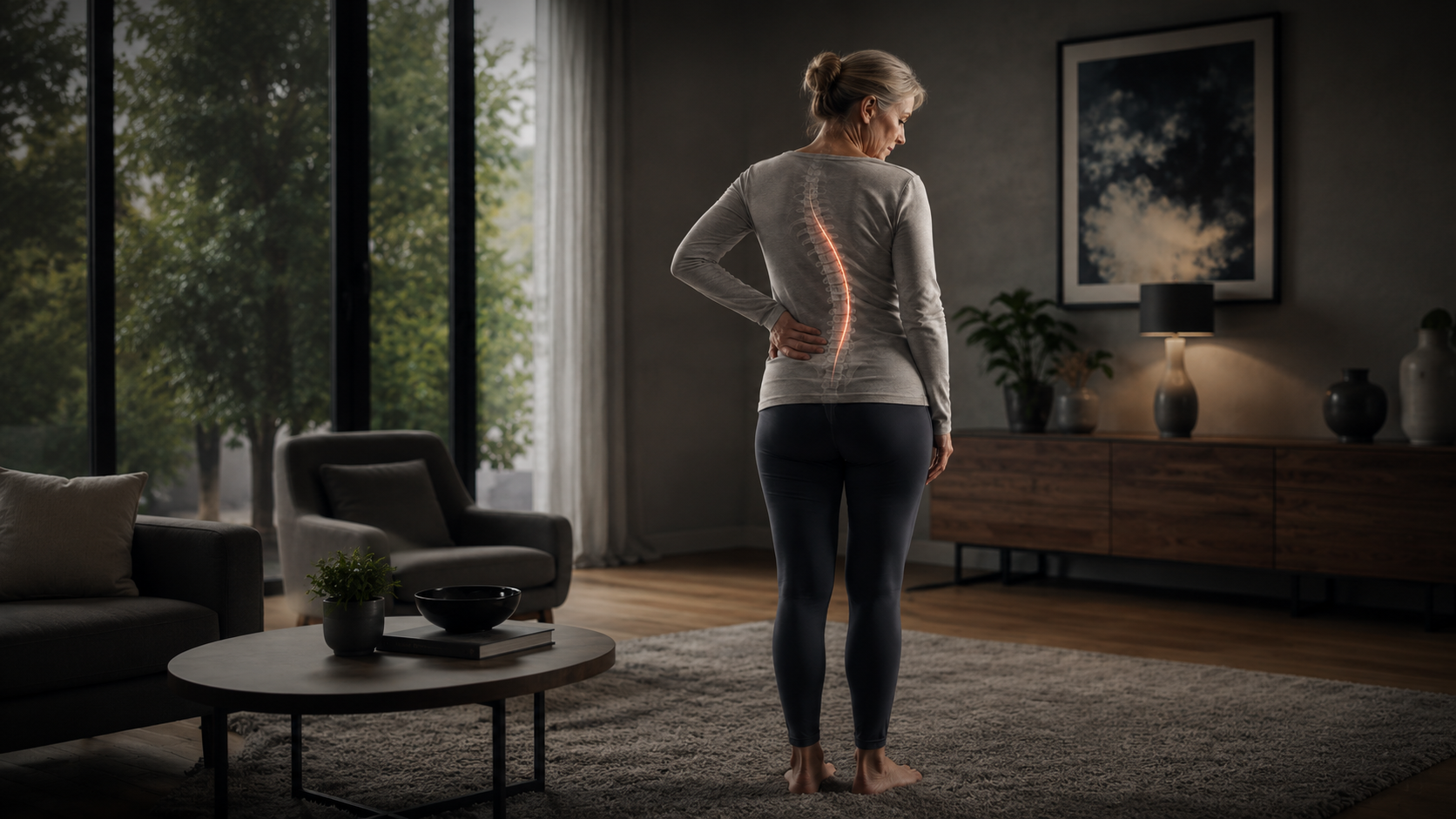
Scoliosis is often thought of as a condition that only affects children and teenagers, but adult scoliosis is also a common spinal condition that can develop or progress later in life.
For some adults, scoliosis causes little or no discomfort and requires only monitoring. For others, changes in spinal alignment can lead to back pain, stiffness, reduced mobility, nerve symptoms and difficulty carrying out everyday activities.
Understanding adult scoliosis treatment options can help patients recognise symptoms, explore appropriate treatments and understand when specialist assessment may be beneficial.
The good news is that having scoliosis does not automatically mean you will need surgery. Many adults manage their symptoms successfully through targeted non-surgical treatment, while modern surgical techniques can help carefully selected patients with more severe spinal deformity.
What Is Adult Scoliosis?
Scoliosis is a condition where the spine develops an abnormal sideways curvature, often combined with a rotational change in the vertebrae.
A normal spine has natural curves when viewed from the side, but when viewed from behind it should appear relatively straight.
With scoliosis, the spine may:
- Curve sideways
- Rotate around its axis
- Affect overall spinal balance
In adults, scoliosis is generally divided into two main categories:
- Adult idiopathic scoliosis – a continuation of scoliosis that began during adolescence
- Adult degenerative scoliosis – a curve that develops due to age-related changes in the spine
Types of Adult Scoliosis
Adult Idiopathic Scoliosis
Some adults have had scoliosis since childhood or adolescence but may not have experienced significant symptoms until later in life.
Over time, natural ageing changes can affect the spine and cause existing curves to become more noticeable or symptomatic.
Adult Degenerative Scoliosis
This is the most common form of scoliosis that develops in adulthood.
It occurs due to gradual changes within the spine, including:
- Disc degeneration
- Arthritis of the spinal joints
- Loss of disc height
- Spinal instability
As discs and joints wear down unevenly, the spine can gradually become curved or imbalanced.
This type is more common in adults over the age of 50.
What Causes Adult Scoliosis?
The causes of adult scoliosis depend on the type of curve.
Common contributing factors include:
Age-Related Spinal Changes
As we age, the structures supporting the spine naturally change.
These changes may include:
- Disc degeneration
- Joint arthritis
- Ligament thickening
- Reduced spinal flexibility
Uneven degeneration on one side of the spine can contribute to curvature.
Previous Scoliosis
Adults who had scoliosis during childhood may experience progression later in life due to changes in spinal health.
Spinal Degeneration
Wear and tear affecting the discs and joints can alter the balance of the spine, sometimes leading to a degenerative curve.
Osteoporosis and Vertebral Fractures
Reduced bone strength can contribute to spinal changes that affect alignment.
Common Symptoms of Adult Scoliosis
Symptoms vary depending on:
- The size and location of the curve
- Whether nerves are affected
- Overall spinal balance
- The individual's activity levels
Common symptoms include:
- Lower back pain
- Back stiffness
- Reduced mobility
- Muscle fatigue
- Uneven shoulders or hips
- Difficulty standing upright
- Changes in posture
- Reduced walking ability
Some patients notice visible changes such as:
- One shoulder appearing higher than the other
- A more prominent shoulder blade
- Uneven waistline
- The body leaning to one side
When Adult Scoliosis Causes Nerve Symptoms In some cases, scoliosis can contribute to narrowing around the spinal nerves.This may cause symptoms similar to other spinal conditions, including:
- Leg pain (sciatica)
- Numbness
- Tingling
- Weakness
- Reduced walking distance
These symptoms may occur because the curved spine changes the spaces where nerves travel.
A detailed assessment is important to determine whether symptoms are caused by scoliosis itself or another spinal condition occurring alongside it.
How Is Adult Scoliosis Diagnosed?
Diagnosis begins with a detailed consultation.
A spine specialist will assess:
- Your symptoms
- Your medical history
- How the condition affects your lifestyle
- Any previous treatment
A physical examination may look at:
- Posture
- Spinal alignment
- Balance
- Walking pattern
- Muscle strength
- Nerve function
Imaging Tests for Adult Scoliosis X-rays
Standing full-length spinal X-rays are commonly used to assess:
- The size of the curve
- Spinal balance
- Alignment changes
- Progression over time
Because scoliosis is a three-dimensional condition, standing images are particularly useful because they show how the spine functions under normal load.
MRI Scan
An MRI may be recommended if symptoms suggest nerve involvement.
It can assess:
- Disc problems
- Nerve compression
- Spinal stenosis
- The condition of the spinal cord
CT Scan
A CT scan may provide additional detail about the bones and is sometimes used when planning complex surgery.
Non-Surgical Adult Scoliosis Treatment
Many adults with scoliosis can manage symptoms without surgery.
Treatment focuses on improving comfort, mobility and function.
Physiotherapy
Physiotherapy is often an important part of adult scoliosis management.
A tailored programme may help:
- Strengthen muscles supporting the spine
- Improve flexibility
- Enhance posture
- Improve balance
- Reduce discomfort
Exercises are usually adapted to the individual's curve, symptoms and physical abilities.
Pain Management
Depending on symptoms, treatment may include:
- Anti-inflammatory medication
- Pain relief
- Treatment for nerve-related pain
A specialist can advise on the most appropriate options.
Exercise and Lifestyle Changes
Remaining active is important for maintaining spinal health.
Helpful strategies include:
- Regular low-impact exercise
- Maintaining muscle strength
- Keeping a healthy weight
- Avoiding prolonged inactivity
- Improving daily movement patterns
Activities such as walking, swimming and supervised strengthening exercises can often be beneficial.
Injections
For some patients experiencing nerve-related pain, image-guided spinal injections may provide symptom relief.
These may help reduce inflammation around irritated nerves and allow rehabilitation to progress.
When Is Surgery Considered for Adult Scoliosis?
Most adults with scoliosis do not require surgery.
However, surgical treatment may be considered when:
- Pain remains severe despite non-surgical treatment
- Spinal imbalance affects standing or walking
- There is significant nerve compression
- The curve is progressing
- Quality of life is significantly affected
The decision to recommend surgery depends on many factors, including:
- Age
- Overall health
- Severity of symptoms
- Curve size
- Spinal balance
- Individual goals
Adult Scoliosis Surgery Options
Surgery for adult scoliosis is highly individualised and depends on the complexity of the spinal deformity.
Decompression Surgery
If scoliosis is causing pressure on spinal nerves, decompression may be performed to create more space around the nerves.
This can help relieve symptoms such as:
- Leg pain
- Numbness
- Weakness
Spinal Fusion Surgery
For patients with significant deformity or instability, fusion surgery may be recommended.
Fusion aims to:
- Correct spinal alignment
- Stabilise the spine
- Prevent further progression of the curve
It involves joining selected vertebrae using bone graft and specialised implants.
Minimally Invasive and Modern Techniques
Advances in spinal surgery have improved treatment options for many patients.
Modern approaches may include:
- Minimally invasive procedures
- Advanced imaging guidance
- Improved implant technology
- More precise surgical planning
These techniques may help reduce tissue disruption and support recovery, although complex scoliosis surgery remains a major procedure requiring careful assessment.
Recovery After Adult Scoliosis Treatment
Recovery depends on the type of treatment received.
Non-Surgical Recovery
Patients often benefit from:
- Regular exercise
- Physiotherapy
- Activity modification
- Long-term spinal health strategies
Recovery After Surgery
Recovery following scoliosis surgery is gradual and varies depending on the complexity of the procedure.
Rehabilitation may involve:
- Early mobilisation
- Physiotherapy
- Gradual strengthening
- Increasing walking distance
- Returning slowly to normal activities
Your specialist team will provide guidance specific to your procedure and circumstances.
When Should You See a Spine Specialist?
You should consider specialist assessment if:
- Back pain is affecting your daily life
- Your posture has changed noticeably
- You are struggling to stand or walk comfortably
- Symptoms are worsening
- You have leg pain, numbness or weakness
- You have been advised that surgery may be required
- You want a second opinion about treatment options
Adult scoliosis can be complex, and assessment by a specialist spine team can help ensure the right diagnosis and treatment plan.
Frequently Asked Questions
Can scoliosis develop in adulthood?
Yes. Adult scoliosis can develop due to age-related degeneration of the spine, even in people who did not have scoliosis as children.
Does adult scoliosis always get worse?
Not always. Some curves remain stable, while others may progress over time. Regular assessment can help monitor changes.
Can adult scoliosis be treated without surgery?
Yes. Many adults manage symptoms successfully with physiotherapy, exercise, lifestyle changes and pain management.
Will I need spinal fusion surgery?
Not necessarily. Surgery is only considered when symptoms, spinal imbalance or nerve problems significantly affect quality of life.
Is back pain always caused by scoliosis?
No. Many adults with scoliosis have other spinal changes, such as disc degeneration or arthritis, that may contribute to symptoms.
When to Seek Expert Advice
Adult scoliosis can range from a mild spinal curve with minimal symptoms to a complex condition affecting mobility and quality of life.
The most important step is obtaining an accurate assessment of your spine and understanding the cause of your symptoms.
With appropriate treatment, many patients can improve pain, maintain mobility and continue enjoying an active lifestyle. For those who require surgery, advances in spinal techniques provide more options than ever before.
A consultation with a specialist spine team can help you understand your condition and identify the treatment approach that best matches your symptoms, lifestyle and goals.